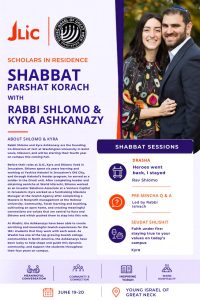
 Rabbi Shlomo and Kyra Ashkanazy are the founding Co-Directors of JLIC at Washington University in St. Louis. On June 19-20, 2026, they came to Young Israel of Great Neck as the scholars-in-residence. Not just to give talks, but to sit at the Shabbat tables of the students they work with every week on campus.
That’s the part that doesn’t make it onto the flyer. Rabbi Shlomo said it well: “Getting to see our students in their home environment, their shul, their community. It was something special.” They stayed Friday night with a family whose son just graduated from WashU and whose younger brother is a current student there. They ate Shabbat lunch with another family whose daughter is a senior. Seeing those students at home, with their families, in the shuls they grew up in, put a face to everything they do all year.
JLIC is built on relationships, not just programs. The kind you build over late nights, Shabbat meals, and honest conversations. When a JLIC director sits at a student’s family table, it means something: this relationship goes further than campus.
The Shabbat had three sessions.
Rav Shlomo’s drasha pulled from his own life. He spent years in Jerusalem, including serving in the Givati unit through the Hakotel hesder program, and had to decide whether to stay or come back. His talk, “Heroes Went Back, I Stayed,” used that choice to speak about what college students face all the time: the small decisions, the ones that seem insignificant at the time, that end up defining who you become. Jewish identity in college isn’t something you declare. You build it in the small stuff, day by day. People were still talking about it after Shabbat.
The pre-mincha Q&A, led by Rabbi Ismach, got into the questions parents of college students actually ask. Should my kid go to YU or a secular school? How do you know if a student will be okay on a non-Jewish campus? What’s different about supporting men versus women in Jewish campus life? It’s the kind of conversation that usually happens in private. Bringing it into the open made it useful.
Kyra closed Shabbat with her seudat shlishit talk, “Faith Under Fire.” She skipped the theory and went straight to real situations: the moments on campus when a student’s values get tested and they have to decide who they are. She drew from years of actual conversations with WashU students.
“Hosting this Shabbat was meaningful for the shul on every level. The sessions were honest and engaging, but what I’ll remember most is watching Rav Shlomo and Kyra with the students and their parents. The warmth was real.”
— Rabbi Ismach, Young Israel of Great Neck
The Ashkanazys start their fourth year at WashU this fall, working with more than 120 students each week. This Shabbat was a good reminder: the relationships they build on campus don’t stay there.
Reach out to any of our Directors to learn more about or support JLIC and our programming.
Related Posts
Business Wisdom and Life Lessons: Michael Staenberg Inspires JLIC WashU Students
ChavrutahFest 2024: Where Jewish Learning Comes Alive
A Home Away from Home: WashU Passover with Rabbi Shlomo and Kyra Ashkanazy