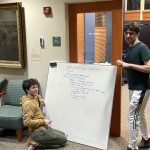
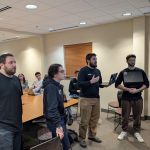
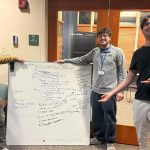
Every year, thousands of college students compete in hackathons. They pull all-nighters, build things from scratch, and walk away with new skills and new friends. For Orthodox Jewish students who observe Shabbat, there has always been a catch: most hackathons run straight through the weekend, from Friday night to Sunday. For a long time, observant students simply sat those out.
Two students at Johns Hopkins decided that did not have to be the case.
From a Bold Idea to a Real Program
Ezra Greenberg and Moe Frumkin had a question: what if a hackathon was built around Shabbat instead of against it? The pitch made its way to Shtark Tank, a program run by Yavneh, the student leadership initiative of JLIC. Shtark Tank gives college students the chance to present their most creative ideas to a panel of Yavneh student leaders and compete for funding to bring those ideas to life. Since its launch, Shtark Tank has distributed over $80,000 to student-driven projects across the Yavneh network. Ezra and Moe’s idea won.
This past March, that winning pitch became reality.
What Actually Happened
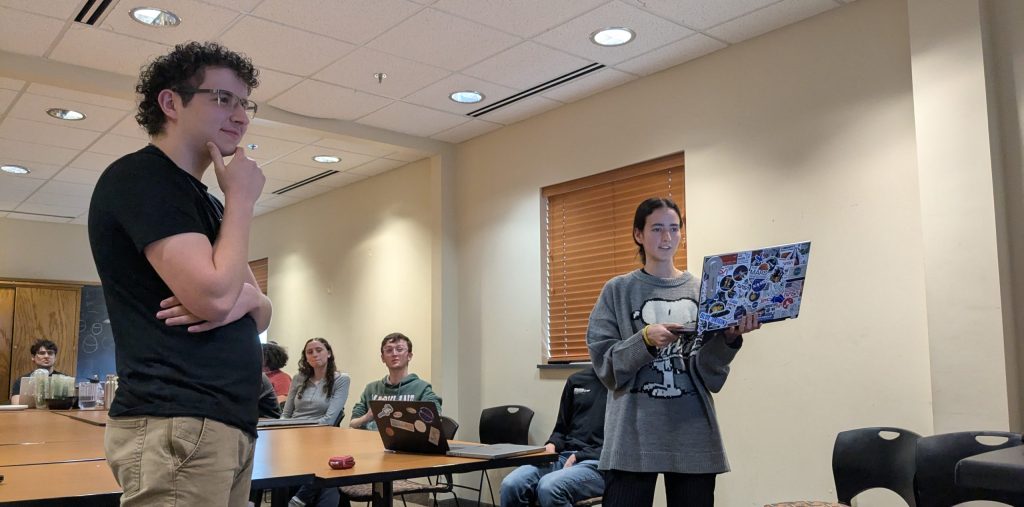
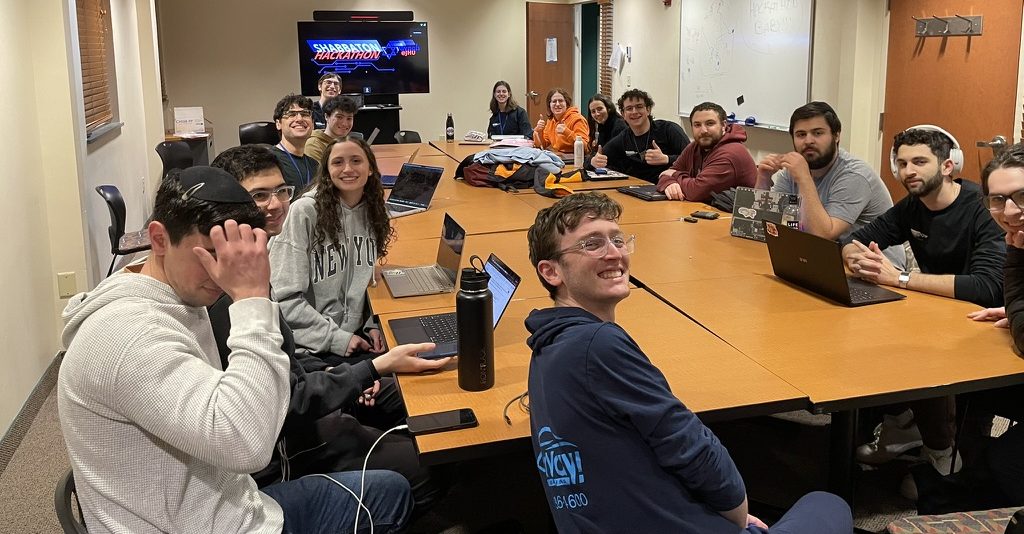
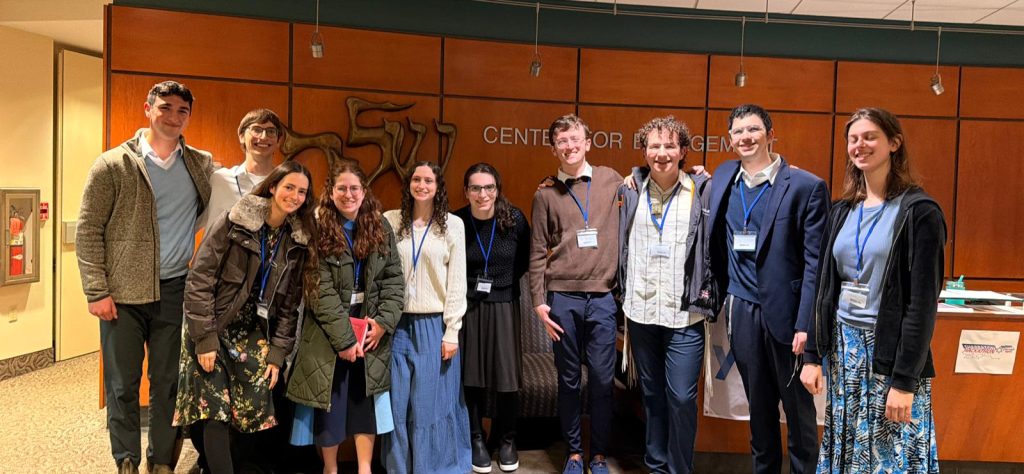
Students from across seven schools gathered at Johns Hopkins for the inaugural Yavneh Shabbaton Hackathon. The weekend started not with laptops, but with Kabbalat Shabbat. Participants davened together, shared Shabbat meals, sang at a Tisch late into the night, and spent Shabbat day getting to know each other across campus lines. Before Seudah Shlishit, JLIC Rabbi Moshe Moskowitz gave a shiur on a Mishnah in Pirkei Avot: the teaching that someone who forgets their Torah learning is considered as if guilty of a grave offense. Little did the participants know that shiur was a preview of what was coming.
Right after Havdalah, everyone grabbed their laptops and gathered to hear the hackathon prompt: design a tool that helps people learning on Sefaria remember their learning or find sources they are struggling to recall. The room let out a collective “Ohhhh” as the connection to Rabbi Moshe’s shiur clicked.
For the next 24 hours, four teams of 14 competitors built. They broke only for meals, Shacharit, and a few hours of sleep. At least six participants never left the Hillel building between the project announcement and morning davening.
What the Students Built
The four projects that came out of the weekend were genuinely impressive.
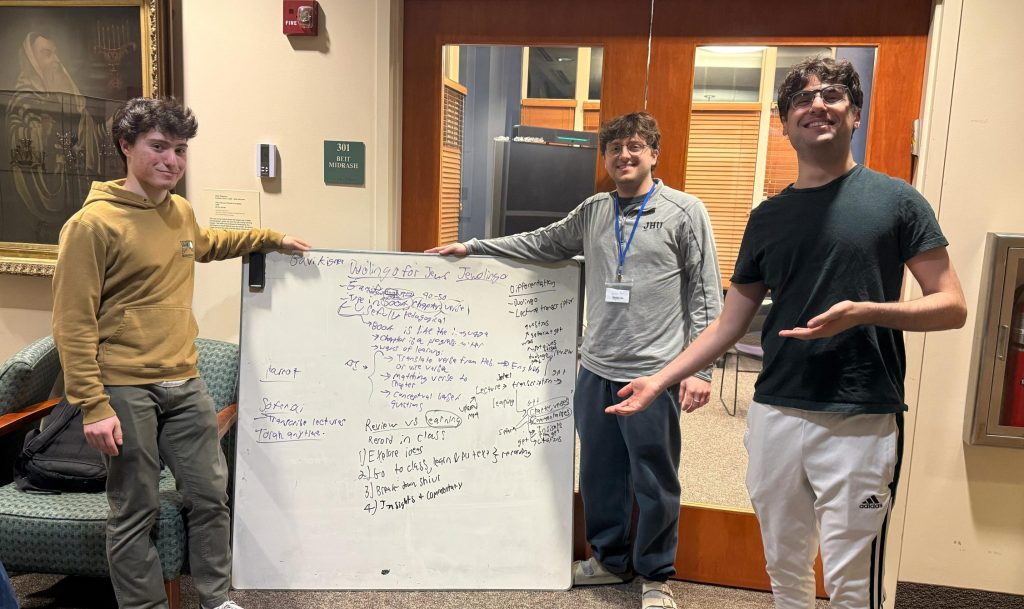
ShiurFlow, built by the JHU team, takes a shiur transcript or video, extracts every Torah source mentioned, pulls those sources from Sefaria, and generates an interactive learning guide and quiz. The judges named it the first-place winner. Michael Kellman, Sefaria’s Chief Product Officer, noted that ShiurFlow “may help to inspire future work by Sefaria to create a tool to generate source sheets simply from shiur recordings.”
Chazara, from the UMD team, used Sefaria and Gemini to generate flashcards for any topic being learned, then scheduled review sessions using spaced repetition, the same scientifically backed memory method used by top students around the world.
LashonLearning, from the Brandeis team, is a Chrome extension that lets users save unfamiliar words from Sefaria texts, customize definitions, see examples in context, and export vocabulary to Anki for further study. It is now live on the Chrome Web Store.
ScroLein, built by a mixed team of students from Stern College, Embry-Riddle Aeronautical University, and University College London, created a student-teacher platform for learning leining, where teachers assign verses from Sefaria and students submit recordings for review.
As Ezra put it: “Little did I know that one Hackathon project would become an extension on the Chrome Web Store and another would potentially inspire new features for Sefaria.”
Why This Matters
The response from participants said it all. Several students told the organizers that they had always wanted to participate in a hackathon but had never been able to because of their Shabbat observance. This was their first one.
That is exactly what this event changed. Orthodox students studying computer science, engineering, and related fields now have a pathway into competitive coding culture that does not require them to set Shabbat aside. The Shabbat they got was not a compromise. It was a full, joyful, connected one. As Ezra reflected afterward, the energy that weekend caught even the Hopkins community off guard: “There was such energy and excitement over the Shabbaton that many other students at Hopkins were shocked when told that there were only 10 people visiting.”
The Shabbaton Hackathon would not have been possible without the generous support of JNF-USA, whose partnership with Yavneh makes programming like this possible for Jewish students across North America. We are grateful for their ongoing investment in the next generation of Jewish leaders.
What Comes Next
This was a pilot. It worked. Now the question is how to grow it.
The Yavneh network spans dozens of campuses. The model tested at Johns Hopkins, a Shabbaton paired with a competitive hackathon built around Torah and Jewish impact, is ready to be replicated. Next year’s event could be bigger, broader, and land at a different campus. Other schools in the network could run their own versions. Everything needed to do it again is already in place.
For Ezra, the weekend represented something bigger than a competition. “This Hackathon felt like the culmination of my Jewish leadership work throughout college.”
Keep an eye out for the next Shtark Tank submission window. Your idea could be next.
To support JLIC’s work or programs, contact us here.
Related Posts
Yavneh Connect: Bridging Campus Life and Professional Growth in NYC
The Yavneh Effect: How One Student is Revolutionizing Jewish Campus Leadership
Yavneh National Hillel Torah Bowl: A Celebration of Torah Knowledge and Community
Building Jewish Community at UT Austin: How Yavneh Fellows Transform Campus Life
Sefarim Connect: Transforms Torah Learning on College Campuses