Monday nights at the JLIC Valley Hub smell like charcoal and chicken fat.
Rabbi David Kashani started the Chabura two years ago. Small group, serious learning, the kind where you actually have to prepare. He and Rebbetzin Shana would set up their dining room table, put out some takeout or whatever she made that night, and guys would show up to learn. Not because they had to. Because the Torah was good and the conversation was better.
It grew. Of course it grew.
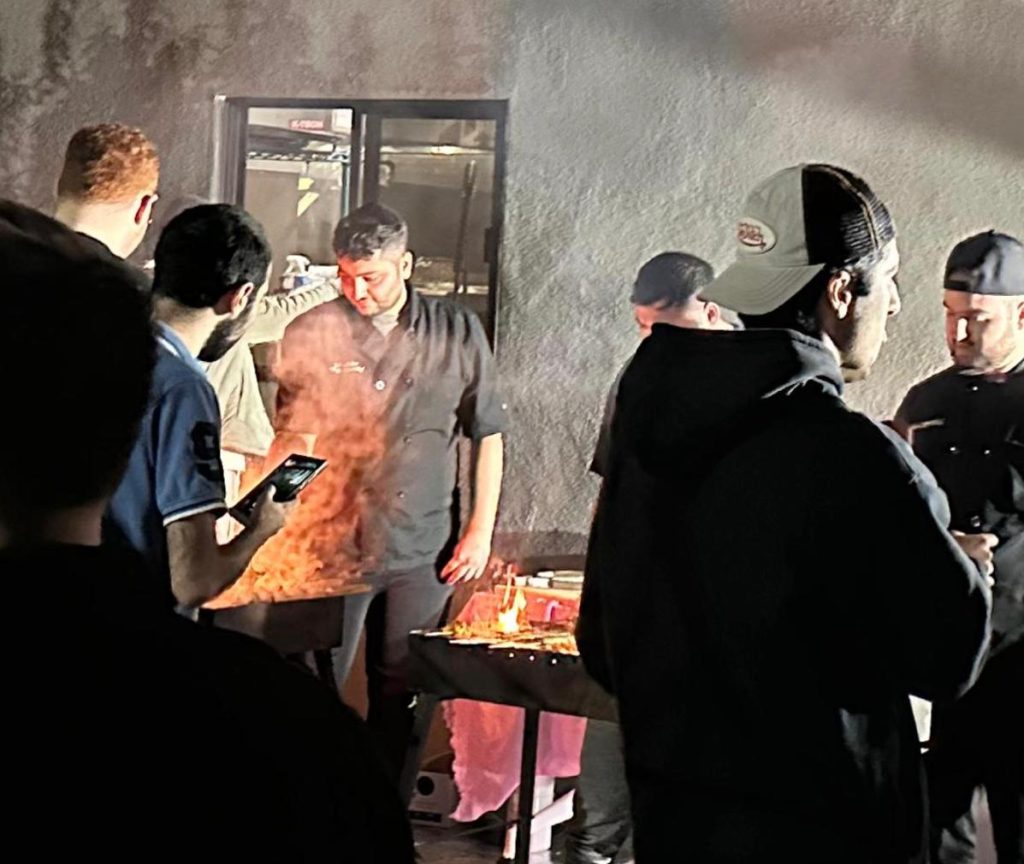
Now when it’s a full Manghal Monday, which happens every month or so, you’ve got close to 30 guys in the backyard. Someone’s always standing too close to the manghal giving unsolicited grilling advice. Someone else is fanning the coals like his Baba taught him the secret technique. The cornhole boards come out. Plates pile up with chicken and kebab straight off the fire, and there’s always that one guy who takes three skewers and then comes back for more.
Forty-five different men have come through over time. Some are regulars. Some show up when they can. But when they’re there, they’re actually there.
The Learning Part
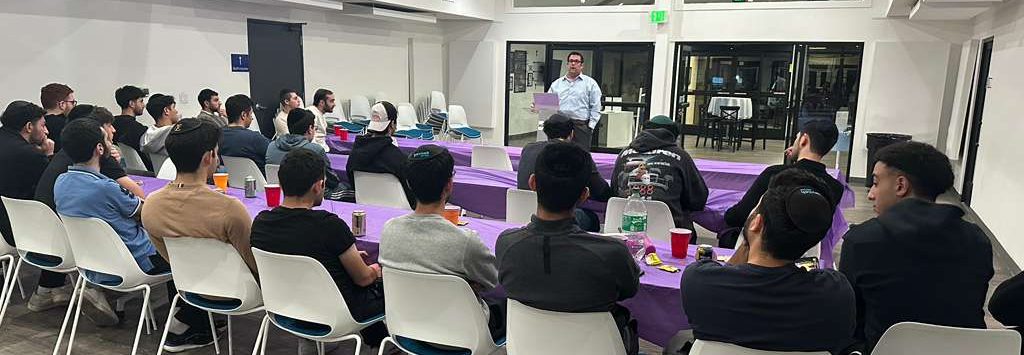
This isn’t a social hour with a dvar Torah tacked on at the end. Rabbi David teaches real shiur. Gemara, halacha, stuff that requires your brain to be on. He’ll stop mid-sugya and ask someone to defend a position they clearly don’t actually hold, just to make them think it through. Guys push back. They argue. Sometimes someone says something that stops everyone cold and Rabbi David just grins because that’s exactly where he wanted the conversation to go.
Rebbetzin Shana is the reason the whole thing works. The house is open. Not “warm and welcoming” in that brochure way, but actually open. Like you can show up, grab food, sit down, and nobody’s performing host duties at you. She’s usually somewhere between the kitchen and the dining room making sure people have what they need, but she’s also fully part of the conversation when she’s in the room. The kind of presence that makes everyone comfortable enough to actually say what they’re thinking.
The smaller Chaburot happen two or three times a month around their table. Those nights hit different. More intense. Someone’s usually bringing up something they’re wrestling with for real, not hypothetically. For example, someone might ask about a business ethics issue that was clearly about his actual job, and the whole conversation will shift.
The learning sticks differently when you’re sitting across from someone’s half-eaten pasta instead of in rows.
Before anyone leaves they daven Maariv together. The talking stops, Siddurim come out, and whatever energy was in the room shifts. It’s not performative. Nobody makes a big deal about it. It just happens.
One of the guys said: “By far and away the best part of the week.”
Why This Works
Rabbi David and Rebbetzin Shana built something that refuses to compromise. You get serious Torah and actual community, and neither one gets watered down for the sake of the other. That’s rare.
Guys show up because they want to grow, they want to learn, and they want to be around other men who are trying to do the same thing. No one’s checking attendance or sending reminder texts. No one’s guilting anyone into showing up. They come because Monday night became the thing they look forward to, and multiple guys now plan their week around it.
The backyard thing, the manghal, the cornhole… that all matters because it creates the space where learning can happen. But make no mistake, the learning is the center. Take that away and it’s just a barbecue. Keep that and everything else falls into place.
For a lot of guys at JLC Valley Hub, Monday isn’t the start of a long week anymore. It’s the night that makes the week worth it.
Reach out to any of our Directors to learn more about JLIC and to support our programming.
Related Posts
Young Jewish Professionals Explore AI’s Role in Religious Life
Jewish Grad Students Pay It Forward at JLIC’s MedConnect Panel
From Stress to Success: Young Couples Unite for JLIC’s Shalom Bayit Workshop
JLIC West Coast Initiative Supporting Health Science Students