At Columbia and Barnard, men are about a quarter of the Jewish student community. So when one of them finished Shas Mishnayot in the middle of the semester, his rabbi’s living room filled up fast.
Guys packed around the dining room table and pulled in extra chairs wherever they fit, balancing plates of sushi wherever they found space. Nobody had to be there. It was a Sunday. But the room filled up anyway, because when someone finishes something that hard, you show up.
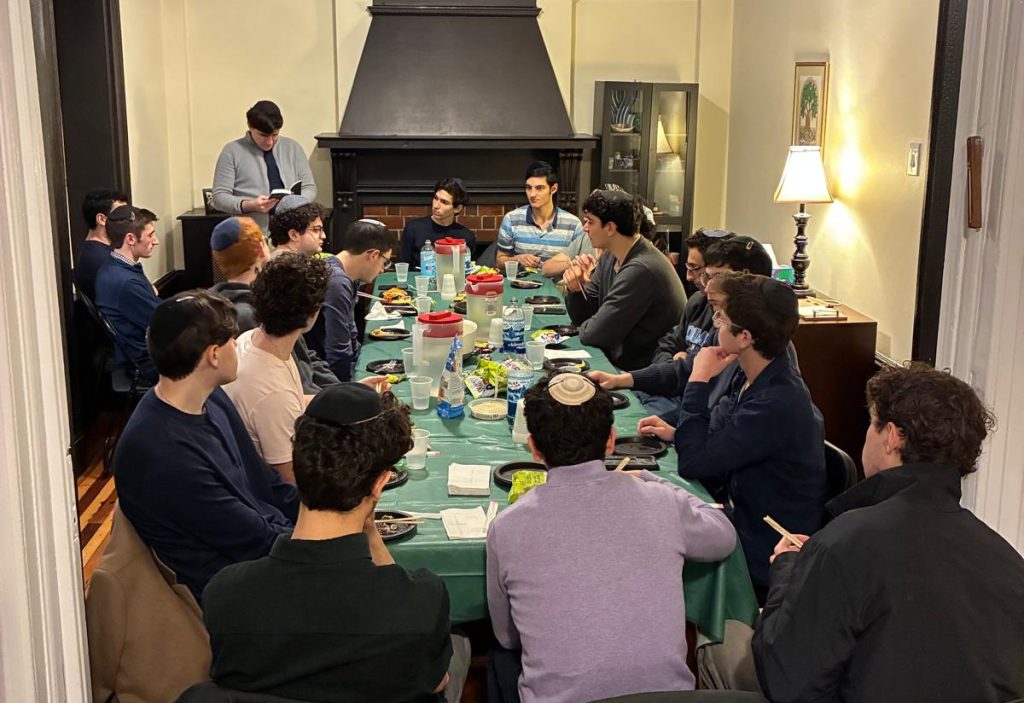
Shevet Achim, the men’s learning group, had been meeting consistently throughout the year. They learned together, ate together, and talked through ideas that did not always fit neatly into a fifty-minute shiur. The siyum was a natural next step. A student set a long-term goal and followed through. His friends came to mark it with him.
It was not flashy. It was real.
Learning was happening across campus all semester. A shiur reframed Purim drinking as a question of spiritual focus rather than excess. A weekly parsha lunch and learn gave students a place to think between classes. A daily five-minute halacha between mincha and maariv grounded the day before it got away from them. Some programming was built specifically for women: a three-part series on the halacha of candle lighting packed the room, and a new series on keeping a kosher college apartment started drawing students. When more than thirteen hundred people showed up for Mega Shabbat in the main gym, Jasmine had spent a full workday running a challah bake to get them there. She had been preparing them for that room all semester.
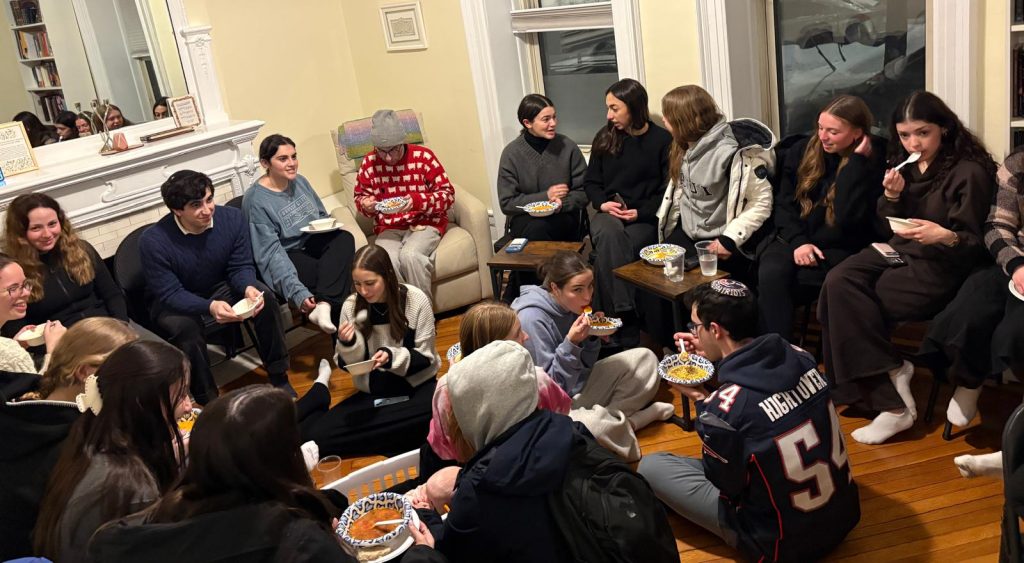
The Peled-Schwartz apartment became something more than a place for programming. Students knocked on that door with personal and sensitive questions that don’t make it into public spaces. Some needed halachic guidance on matters they wouldn’t raise in a shiur. Some needed help navigating a professor who challenged their beliefs in class. Rav Daniel helped a student prepare a shiur of his own and worked with the gabbais to write a clear minyan guide for the new semester. Jasmine taught kallah classes to students on campus.
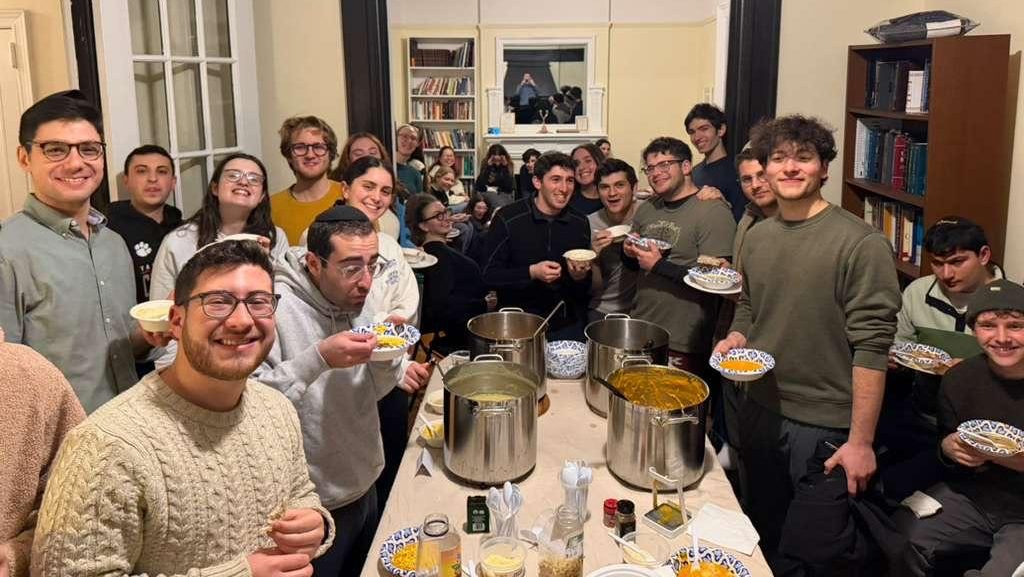
A Tu B’shvat evening had students building edible arrangements around the table. A soup night drew sixty-five people and spilled into every corner of the apartment. Shabbat dinners felt warm and unhurried. The door was always open.
But the image that stays is from that Sunday night.
A college student stood in a dining room in New York City and finished Shas Mishnayot. His friends listened. His rabbi and rebbetzin stood nearby. The room felt tight and full.
In the middle of everything pulling at them, they chose to build something that lasts.
Reach out to any of our Directors to learn more about JLIC and to support our programming.
Related Posts
From Tzfat to Columbia: Students Discover Kabbalat Shabbat’s Hidden Depths
Friendsgiving: A Beacon of Community and Gratitude on Campus
A Historic Visit: Chief Rabbi Sir Ephraim Mirvis at Columbia University
A Heartwarming Chessed Initiative: JLIC Students Making a Difference at Harlem Link Charter School